Assessing Hormones: My DUTCH Plus Test Results

Assessed during mid-luteal – reviewed with a naturopathic doctor.
Lab storefront linked here.
Testosterone
Blood serum is the gold standard for testing hormones but it can be helpful to compare blood serum levels with the DUTCH to assess various hormone metabolites as well as the cortisol curve during the day as opposed to two snapshots of cortisol that is tested (AM & PM Cortisol).
The DUTCH (urine/saliva) test evaluates sex and adrenal hormone such as estrogen, progesterone, testosterone, and cortisol along with their metabolites, melatonin, and organic acid markers
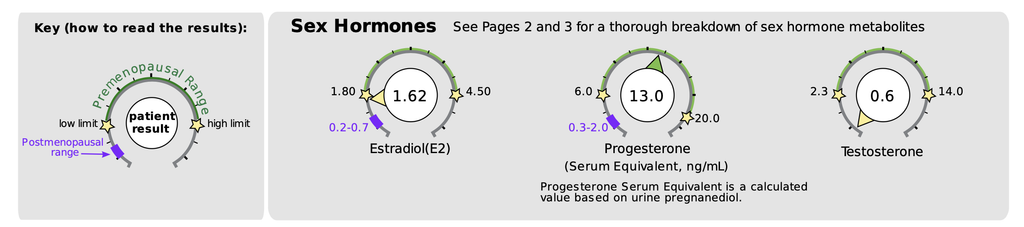
My results above (done in 2023): low estrogen levels as well as low testosterone (which I’m going to get retested via blood serum which I can order on Rupa/Fullscript for myself and clients).
Note regarding testosterone: The testosterone level is 0.60ng/mg, which is low. It is best to test serum levels to confirm before starting a treatment program due to the potential of falsely low urinary testosterone since it binds to various testosterone metabolites.
I care about my health (& I do care about aging gracefully) love love love watching her skin care/health videos.
Estrogens/Estradiol
Estrogen is still within the green dials (but can still be improved aka balanced – phytoestrogens, maca, ) while testosterone is low.
Low estrogen is tied to fatigue, low bone density, joint pain, (I don’t have any symptoms of hot flashes, night sweats, or irregular periods)
Androgens (DHEA and testosterone) in women help with muscle and weight maintenance, memory and brain function, mood, libido and a sense of wellbeing.
If confirmed with low serum testosterone:
Strength training/weight lifting/high intensity interval training (which I’m absolutely not a fan of but I know the importance of movement/exercise hence the CPT interest), Vitamin D3 + K2, zinc, ashwagandha, adequate high quality protein, healthy fats (building blocks of hormones)
You could also consider using Tribulus, shatavari, maca, mitochondrial support and/or zinc to support androgens in women.
Cortisol Snapshot Throughout the Day
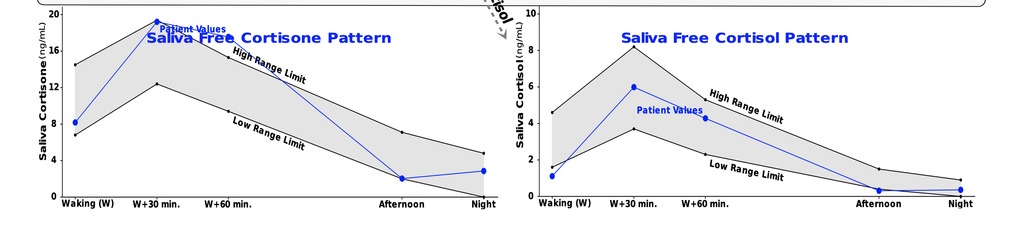
Above are the four different points of cortisol assessed during the day. The graph shows that I have an elevated CAR (cortisol awakening response) which can be a result of an over-reactive HPA axis or ongoing job-related stress (anticipatory stress for the day).
Afternoon fatigue/slump is indicated by the third cortisol sample tested.
-, ashwagandha, L-theanine, magnesium glycinate, having a good sleep routine,
Progesterone aka the chill pill hormone
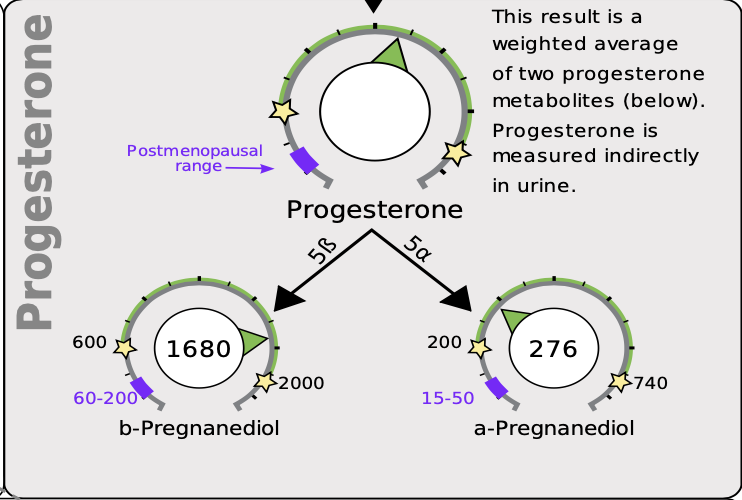
Progesterone and it’s metabolites: β-pregnanediol and α-pregnanediol (contributes to progesterone’s calming effects on mood and sleep via GABA receptors). Progesterone is within range indicating ovulation occurred. I like to refer to Progesterone as the chill pill hormone since it interacts with GABA to help us feel more calm and relaxed. (typically at their lowest during menopause resulting in low mood/irritability)
The metabolites of progesterone are excreted in urine (not the progesterone itself). The urine metabolites of progesterone have been proven to correlate strongly to serum progesterone.
Metabolites of progesterone: 5b-pregnanediol and 5a-pregnanediol. 5b-pregnanediol has less activity in the body but does represent a larger percent of total progesterone metabolism overall. 5a- pregnanediol is often a metabolite of more interest, as it can cross the blood brain barrier and up-regulate GABA activity and is considered neuroprotective to the brain.
If progesterone levels are in the low or lower end of the luteal reference range compared to estrogen levels, women may experience symptoms such as PMS, menorrhagia, mastaglia, moodiness, anxiety, and/or insomnia.
Progesterone is made predominately in the ovaries by the corpus luteum following the release of an egg. Progesterone metabolite levels will increase to the premenopausal luteal range (the range established as the green band between the two gold stars) only after the release of an egg.
I would’ve thought my progesterone was low because while I am much more emotionally regulated (I love & protect my peaceful energy), my anxiety/stress levels were through the roof (see elevated CAR above) after quitting my clinical dietitian job (which was the plan after 1 year), moving to Dallas, the genocide in Gaza, dealing with attachment stuff, & starting a business.
Estrogen and it’s Metabolites/Pathways

To improve the protective pathway (2-OH-E1) I’m taking sulforaphane (more sensitive alternative than taking a DIM supplement which can lower my already low estrogen levels) or consuming broccoli sprouts (contains high amounts of sulforaphane – also great for liver detoxification)
+ Cruciferous Vegetables (DIM is beneficial compound found in cruciferous veggies – can take in supplement form for a higher therapeutic dosage): broccoli, cabbage, cauliflower, brussel sprouts (bleh esp if its from sweetgreen which is overrated bland food with no seasoning/spice)
Methylation is high which means I am not recirculating excess harmful estrogens. Only 2OH and 4OH estrogens are methylated. 16OH-E1 is not. If someone has poor methylation, they may be at higher risk for estrogen dominance and estrogenic cancers.
(also tied to good gut health since out gut contains an estrobolome which includes gut microbiota that regulates estrogen metabolism)
Poor methylation can be caused by nutrient deficiencies or genetic defects in enzymes (namely MTHFR and COMT). Magnesium and methyl donors (SAMe, B Vitamins, TMG, Choline, Folate, Methionine) are co-factors needed for methylation to work properly.
(OAT) Organic Acid Testing: Nutritional Organic Acids

Organic acids are the metabolic byproducts of cellular activity in the body . Organic acid production varies by the individual and can be influenced by foods, environmental toxins, medications or supplements, nutrient status, genetics and more. Organic acids begin to build up when a nutrient cofactor or mineral is not present for a specific reaction to occur. As a response, byproducts (organic acids) build up and can be measured in urine.
On the DUTCH test, the organic acids we measure were chosen due to their specific roles in the metabolism and function of enzymes required for hormone and adrenal health and function.
Glutathione marker: Pyroglutamate: High pyroglutamate is an established marker for glutathione deficiency.
Research supports that when pyroglutamate is high there is need for glutathione. When pyroglutamate is low, this suggests that glutathione levels are still not quite optimal and may need more support from precursors to help create glutathione. Glutathione is a potent antioxidant which helps cells stay healthy and clean by removing toxins.
Pyroglutamate is an intermediate in glutathione recycling and production. Glutathione requires the amino acids cysteine, glycine and glutamate for production. If the body cannot convert pyroglutamate forward to glutathione, it will show up elevated in the urine.
Glutathione is one of the most potent antioxidants in the human body and is especially important in getting rid of toxins including the reactive quinone species formed by 4-OH-E1 and 4-OH-E2. This reactive species can damage DNA if not detoxified by either methylation or glutathione.
Oxidative Stress markers are excellent as well as Indican within range (sign of good gut health but having a GI-MAP done is more detailed regarding gut microbiome health)
Previously done a separate organic acids test from Mosaic Diagnostics for more comprehensive testing/detailed.