
Most Women Have Been Taught to Normalize Digestive Discomfort
Bloating after meals. Occasional heartburn. Constipation that comes and goes. Maybe even abdominal pain that you brush off because “it’’s normal to feel like that after eating a bagel.” What if those symptoms aren’t random or something you’re supposed to live with? Just because these symptoms are common doesn’t mean you have to normalize them. Symptoms are the only way your body knows how to communicate with you. When you start listening to those symptoms instead of dismissing them that’s where long term healing begins.
Two Thirds of Americans Are Dealing With This Right Now
A large national survey of over 71,000 Americans found that two out of three Americans (~61%) experienced at least one gastrointestinal symptom within the past week. Heartburn and reflux were the most common affecting nearly 31% of people with other research suggesting that roughly 20% experience symptoms on a weekly basis.. Abdominal pain, bloating, diarrhea, and constipation each affect around 20-25% of the population.1
Why Your Gut Health Affects Your Entire Body
Your gut is not just a food processing tube. It is the foundation of whole-body health. Here’s a quick look at what’s actually happening inside you:
What Your Gut Is Actually Doing
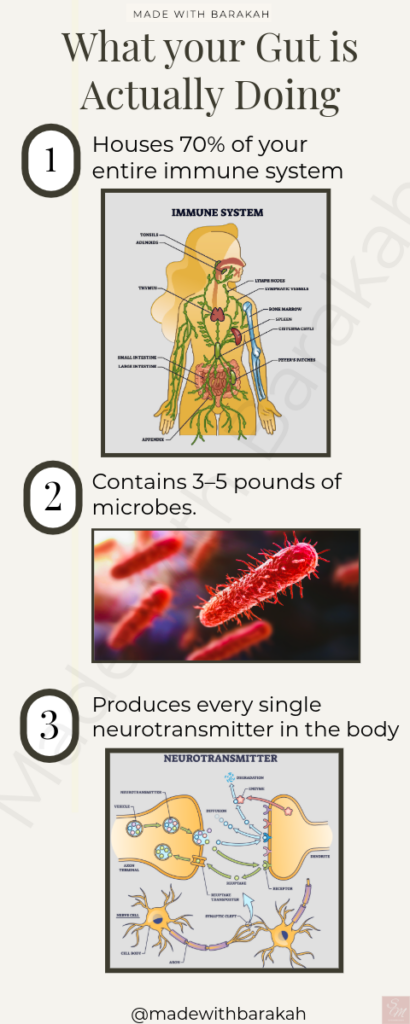
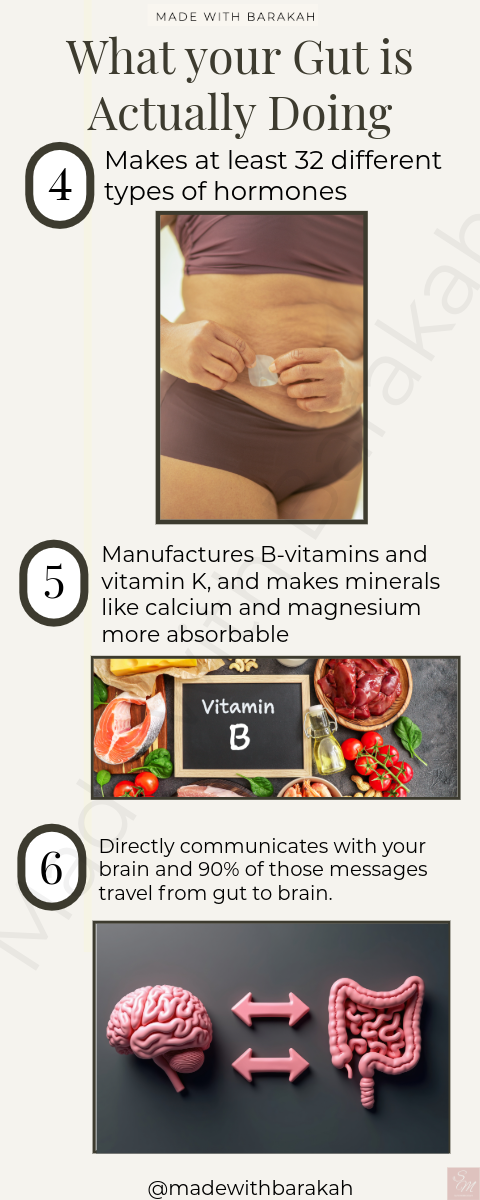
- Houses 70% of your entire immune system
- Contains 3–5 pounds of microbes and your microbial DNA outnumbers your human DNA 150 to 1
- Produces every single neurotransmitter in the body, including serotonin, in greater abundance than the brain itself
- Makes at least 32 different types of hormones
- Manufactures B-vitamins and vitamin K, and makes minerals like calcium and magnesium more absorbable
- Directly communicates with your brain and 90% of those messages travel from gut to brain, not the other way around
Meet the DIGIN Model: The 5 Pillars of Gut Health Used to Assess and Develop Personalized Nutrition Plans
We start with a clinical framework called DIGIN, developed with the Institute for Functional Medicine, to assess and support gut health. These five pillars are the areas to look at first when someone comes with complex health issues. Always begin with the gut.
D: Digestion & Absorption
Digestion begins before you even take a bite, when you start thinking about food, your pancreas and saliva start releasing enzymes in preparation. This is why slowing down to eat, sitting at a table, even saying grace or taking a couple deep breaths before a meal, genuinely helps your digestion. Most of the digestive process runs on the parasympathetic nervous system what we call the “rest and digest” state. If you’re stressed, scarfing down your meal in the car, or rushing through a meal, your body cannot digest optimally.
I: Intestinal Permeability (Leaky Gut)
Think of your gut lining like a very selective security guard. Its job is to let nutrients in and keep everything harmful out — bacteria, viruses, food molecules, heavy metals, chemicals.
G: Gut Microbiome
Your microbiome is a thriving ecosystem of bacteria, viruses, fungi, archaea, and more. These microbes evolved with us. They’re everywhere on earth from Antarctica to the bottom of the ocean to hot springs in Yellowstone. And inside us, they regulate everything.
When your microbiome is in healthy balance, it’s called eubiosis. When it’s out of balance, it’s called dysbiosis and most of the people walking into practitioners’ offices today have some degree of dysbiosis. It affects every tissue in the body. The gut-lung axis, the gut-heart axis, the gut-brain axis, all of these are affected.
I: Inflammation & Immune
With 70% of the immune system residing in the gut, inflammation anywhere in the digestive tract has whole body consequences. Between 50 and 75 percent of what the average American eats every single day is ultra-processed food aligning with the typical Standard American Diet (SAD). Food can be the most healing or the most inflammatory thing we do all day long because we’re taking pounds of it in every day. Any traditional, whole-food diet from any culture tends to be anti-inflammatory. The key is honoring cultural food traditions rather than imposing a one-size-fits-all approach.
N: Nervous System (The Gut-Brain Connection)
The gut and the brain are in constant two-way communication through the vagus nerve nicknamed “The Wanderer” because it travels so widely through the body. The vagus nerve regulates digestion, immune function, satiety, and the stress response. When we’re anxious or overwhelmed, the brain sends signals that put the gut into “fight or flight” slowing digestion and shutting it down. This is why so many cultures around the world practice resting after a big meal. “Rest and digest” is not just a phrase it’s biology at work.
Supporting the vagus nerve is more accessible than you might think. One of the easiest methods to push your body into the rest and digest state is to take three slow, deep belly breaths. Things that support vagal tone include deep breathing, meditation, prayer, acupuncture, yoga, qigong, tai chi, singing, humming, reading Quran with tajweed, gargling, strength training, spending time in nature, and even just reading something fun before bed.
A Fascinating Gut Fact: The surface area of the small intestine, if you could spread it out flat, would cover the size of an entire tennis court. It’s inside that vast surface that the majority of your nutrient absorption happens and it’s only one cell thick. That’s how powerful and how delicate your gut lining really is.
The 5 R’s of Gut Healing
Remove
Take out what’s harming your gut: food triggers, infections (bacterial, fungal, or parasitic), toxins, chronic stress, and ultra-processed foods. This step aligns with the STAIN framework: Stress, Toxins, Adverse Food Reactions, Infections, Nutritional imbalances.
Replace
Add back what your gut needs: stomach acid support, digestive enzymes, bile support, and high-quality whole foods that are fiber-rich, colorful and antioxidant rich, fermented, and prebiotic-packed. As well as lifestyle factors such as 7–9 hours of deep, quality sleep and regular movement to improve gut motility or movement in the gut to improve digestion.
Reinoculate
Rebuild a thriving microbiome with probiotics, prebiotics, and cultured/fermented foods. Sodium butyrate supplements can also help increase beneficial microbes like Akkermansia.
Repair
Heal the gut lining with targeted nutrition: L-glutamine, zinc carnosine, vitamin A, omega-3s, sodium butyrate, DGL, slippery elm, aloe vera, and botanical supports. Intermittent fasting can also help the gut repair itself overnight.
Rebalance
Your emotional, spiritual, and relational life matters. Sense of purpose, connection, joy, prayer, rest, creativity, these are not extras. They are medicine. These diets and protocols are meant to be short-term interventions, not lifelong restrictions.
Foods That Heal vs. Foods That Harm Your Gut
Gut-Supportive Foods
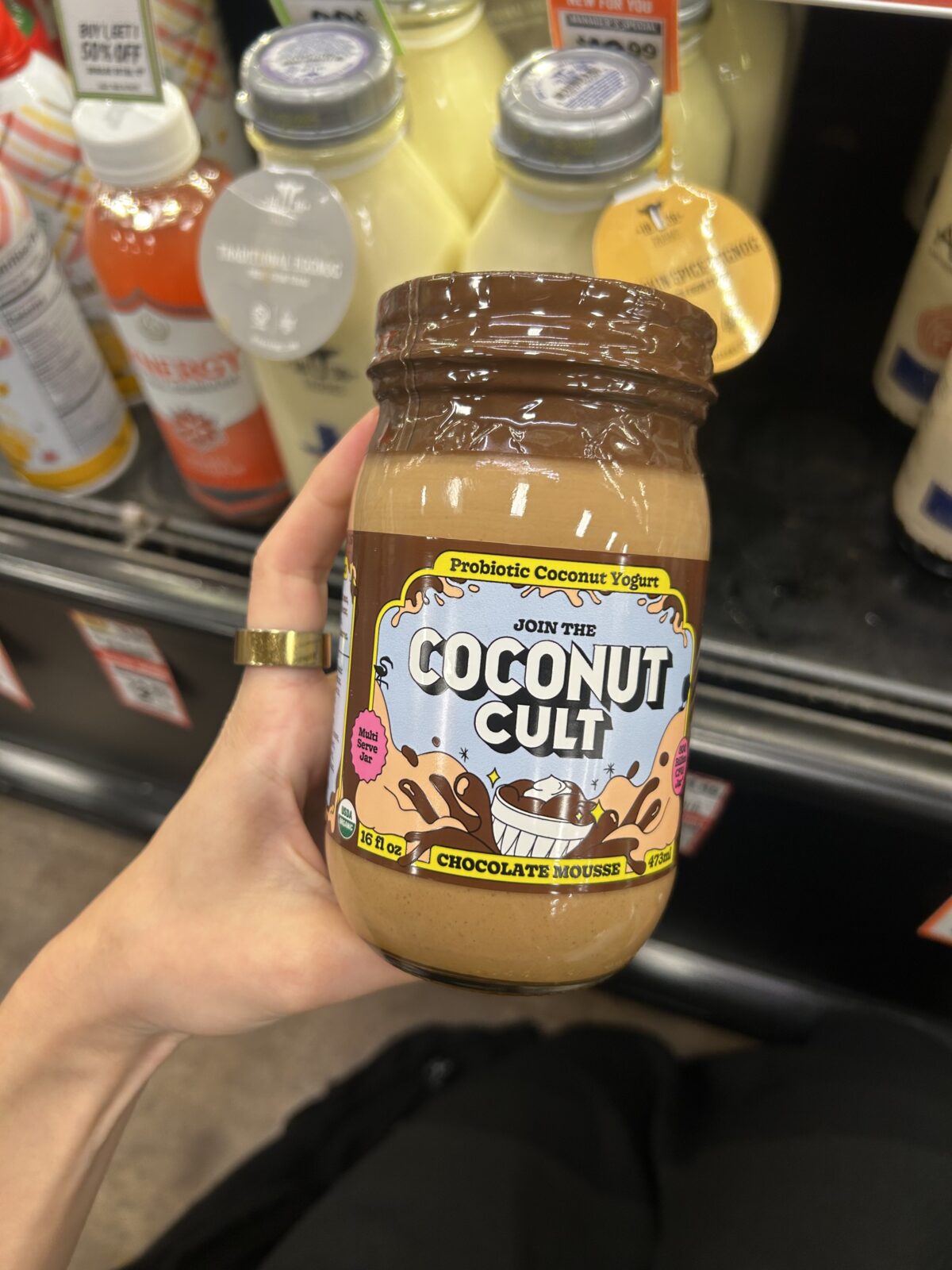
- Fermented foods (yogurt, kefir, kimchi, sauerkraut)
- Colorful vegetables & fruits (prebiotic fibers)
- Garlic, onions, leeks, asparagus (prebiotic powerhouses)
- Fatty fish, walnuts, flaxseed (omega-3s)
- Cooled rice & potatoes, green bananas (resistant starch)
- Blueberries, olive oil, green tea (polyphenols)
- Bone broth, soups, stews (healing to the gut lining & easy to digest)
- Sea vegetables (nori, kombu: great prebiotic benefits)
- Herbs & spices (anti-inflammatory)
Gut-Disrupting Foods
- Ultra-processed foods (50–75% of the average American’s diet)
- Refined sugars & high-fructose corn syrup
- Low-fiber diets
- Excess alcohol
- Artificial sweeteners ending in “-ol”
- Food additives: emulsifiers, titanium dioxide, maltodextrin
- High saturated fat, excessive red meat
- Microplastics & nanoparticles (in many packaged foods)
Daily Habits That Support a Healthy Gut
Gut Healing Daily Practices:
- Slow down and sit down to eat. Not in the car, not standing at the counter. Your parasympathetic nervous system needs to be activated for digestion to work.
- Chew thoroughly. Digestion begins in the mouth and thorough chewing reduces the workload downstream. Use those teeth for what they were meant to be used for.
- Stop eating 2–3 hours before bed. Your gut, like the rest of you, needs time to rest and repair overnight. The gut microbiome has its own circadian rhythm and cleanses itself during fasting periods.
- Drink 1.5–2 liters of water daily. Essential for healthy motility and preventing constipation.
- Move your body. Exercise supports gut motility, microbiome diversity, and stress reduction.
- Sleep 7–9 hours. The average person gets an hour less than they need. Your gut repairs and resets at night.
- Take three deep belly breaths. Right now, mid-day, whenever you feel stressed. This is one of the fastest ways to activate your vagus nerve and shift into “rest and digest” or parasympathetic mode.
- Find what fills your cup. Gardening, pilates, prayer, grandkids, reading for fun, whatever helps you genuinely recharge. This is part of gut healing, not separate from it.
What You Can Take Away from All of This
Your gut is the foundation. What happens there affects your hormones, your brain, your immune system, your skin, your bones, and your mood. Digestive symptoms are not something to dismiss or just manage with medications forever, they’re messages worth listening to.
Root causes matter more than symptom relief. Two people can both have IBS and need completely different approaches. One might have SIBO. One might have a gluten sensitivity. One might need magnesium. One might need to leave a stressful job or have better stress management tools. This is why a truly personalized approach changes everything.
Food is the most powerful lever you have. Every single day, what you eat is either building a healthier gut or a reactive one. More assorted types of fiber (soluble and insoluble), more fermented foods, more colorful plants and less ultra-processed everything can create remarkable change over time.
Healing is not a straight line. Be patient with yourself. Build the habits. Let your body do what it was designed to do.
References
- Almario, Christopher V., et al. “Burden of Gastrointestinal Symptoms in the United States: Results of a Nationally Representative Survey of Over 71,000 Americans.” The American Journal of Gastroenterology, vol. 113, no. 11, 2018, pp. 1701–1710. ↩︎
Find your root cause(s).

